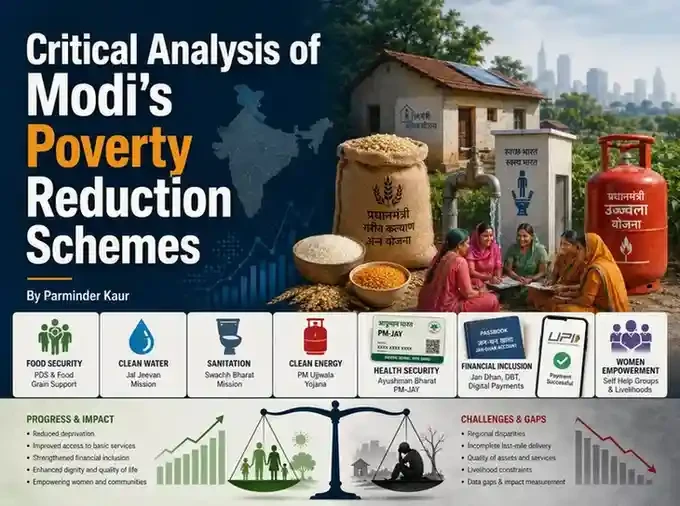
Indian Prime Minister Narendra Modi is claiming a massive victory in the fight against poverty, with official reports suggesting that 250 million people have climbed out of multidimensional poverty. His government points to the widespread distribution of essential services like clean water, cooking gas, toilets, and health insurance as proof of this success. On the surface, the transformation looks impressive, with millions now having access to basic amenities they once lacked.
However, a closer look reveals a more complicated reality. Critics are asking a tough question: if poverty has truly been defeated, why does the government still provide free food rations to over 810 million people? While these welfare programs have certainly cushioned the blow of extreme deprivation, they appear to be keeping people in a state of welfare-supported survival rather than helping them achieve long-term economic independence.
The central issue is whether these schemes are a ladder to success or just a safety net. A family might have a bank account, a toilet, and a tap in their home, but if they lack a stable income, quality education, or protection from medical emergencies, they remain one crisis away from falling back into poverty. For many, these government handouts are necessary for day-to-day living, but they do not necessarily lead to durable economic dignity.
At BAYPOST, we believe it is vital to look beyond the government’s shiny statistics. Poverty is not just about the lack of a toilet or a gas connection; it is about having the opportunity to earn, grow, and live with security. While the Indian government has done a good job of delivering basic services, the real test of its success lies in whether these citizens can eventually stand on their own feet without needing the state to provide their next meal.
Source: abclive.in