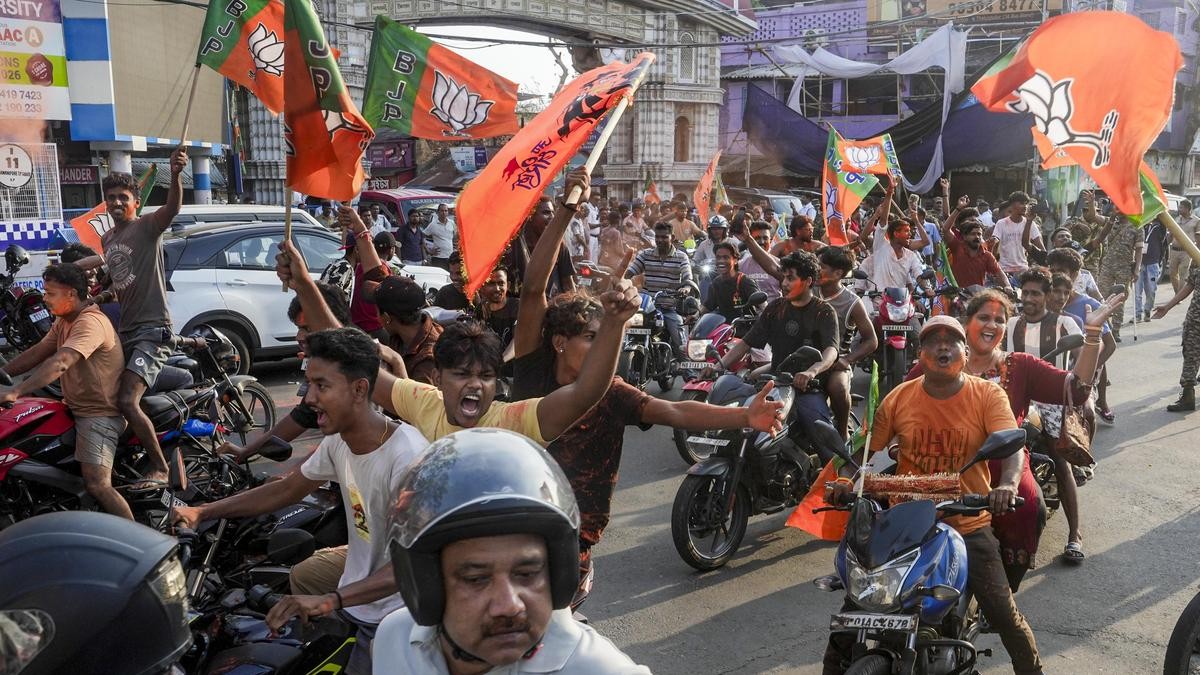
The political landscape in West Bengal has shifted dramatically as the Bharatiya Janata Party (BJP) secured its first-ever solo election victory in the state. This historic win marks the end of a decades-long struggle to gain a firm foothold in a region long dominated by other political heavyweights.
This success did not happen overnight. The party's journey began years ago when it first aligned with Mamata Banerjee’s Trinamool Congress during the Vajpayee administration. Since then, the BJP has systematically built its influence, positioning itself as the primary opposition capable of challenging Banerjee’s long-standing grip on power.
The road to this victory was far from a straight line. After hitting a high point by winning 18 seats in the 2019 general elections, the party faced significant setbacks during the 2021 state assembly polls. A disappointing performance in the 2024 parliamentary race further forced the party to rethink its strategy.
To turn the tide for the 2026 assembly elections, the party leadership went back to the drawing board. They overhauled their internal organization and sharpened their campaign messaging to resonate more deeply with local voters. This strategic pivot proved to be the missing piece of the puzzle.
By combining years of groundwork with a refined approach to voter outreach, the BJP managed to overcome its past failures. This result signals a major transformation in West Bengal’s electoral dynamics, setting the stage for a new era in the state's governance.
Source: thehindu.com